Dominique de Varine
[The below text has been translated from the French. The original French text is at the bottom if you are so interested.]
It took the developments in painting during the 19th and early 20th centuries, from William Turner to Henri Matisse and Georges Braque, for our gaze to be freed and for us to allow ourselves to examine parietal art with an unprejudiced spirit. Similarly, certain developments in art from the twentieth century onward, particularly from its second half, are needed to approach the "caves" of Barabar in their singularity, overflowing any referential framework.
The Void and the Full, the Nothing and the Everything, the Hare and the Rifle
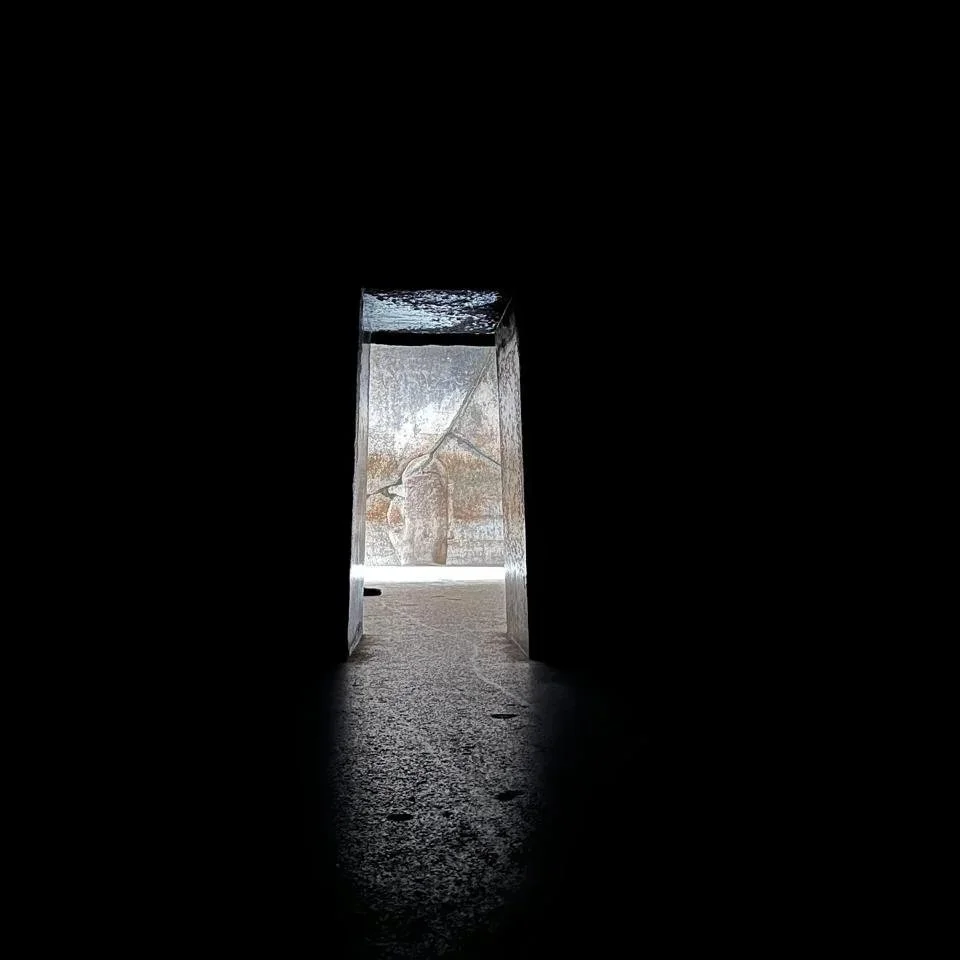
No figuration of any kind, no statuary or engraving adorns the interior volumes with their clockwork precision. Nothing but emptiness. And formal resonance.
Membrane, cocoon, receptor, chrysalis of granite polished to the micron on whose surface your body is reflected, but equally folds and gullies. The Barabar caves defy all interpretation, which remain contradictory beyond their possible assimilation to Ajivika culture (Maurya Empire, around the 5th century BCE). Therefore, this text will offer no explanation of what these caves are, their possible past role, or the reason for their creation. The technical aspects remain a mystery. But an attempt to read their formal deployment.
Read More